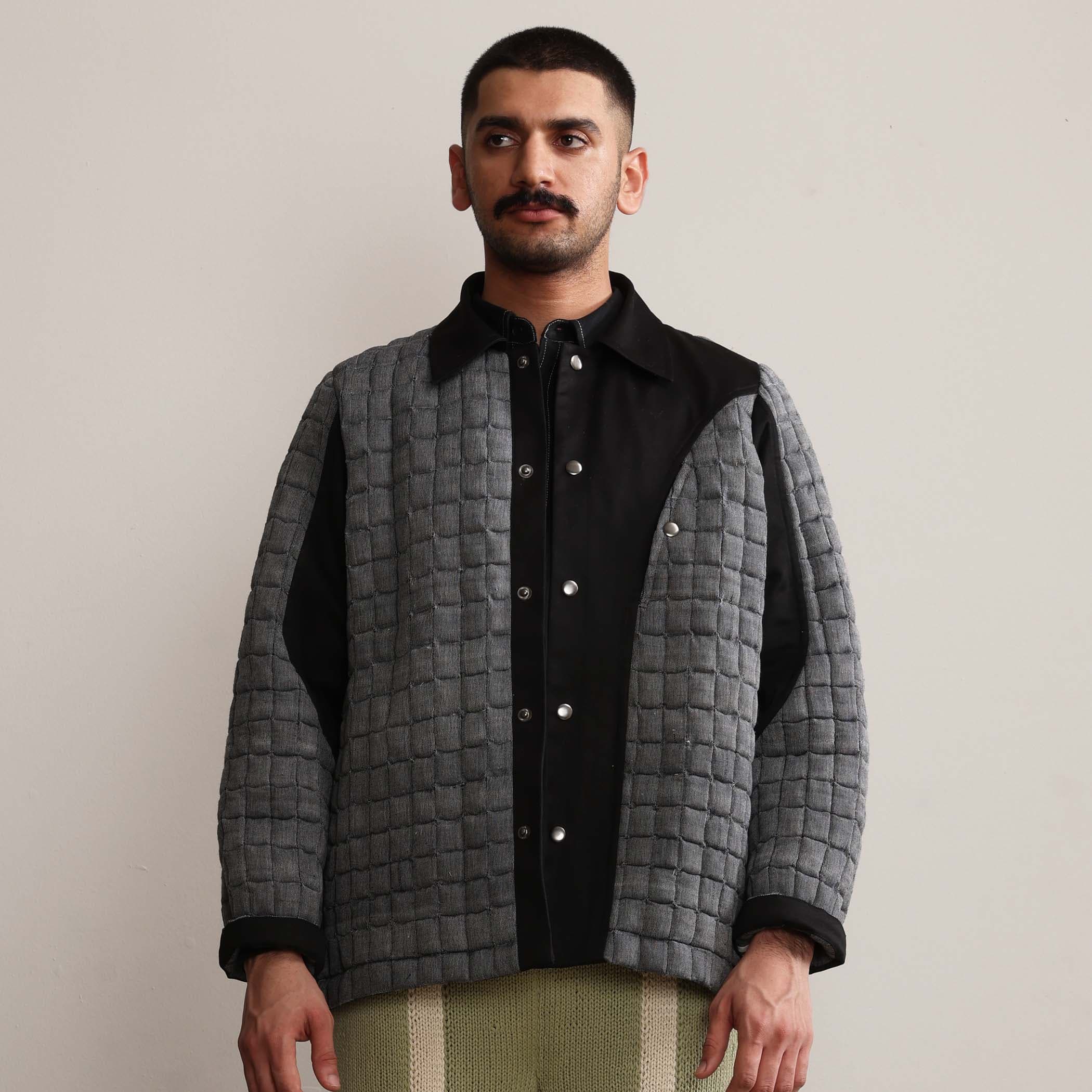
Preservation and protection — two tenets woven into humanity's DNA. Eternal concepts that have survived because survival was what these concepts preached. Both have taken on myriad cultural and historical meanings. But one of the places they merge and continue to grow is no doubt in clothing. That is the central thesis Ranjit Yadav and Saurabh Maurya of MARGN are exploring. The small cultures human beings have developed over time, built on an instinctual need for survival. Human systems, as they call them.
The Origin
But it is far from just the romance of daily life that these human systems capture. It is also a nod to the struggles that entail being human. In some places, life continues through mechanical means and older methods, giving rise to ways of living that are both sustainable and deeply human. These origins ground MARGN's work in realities often overlooked within the larger cultural discourse. Saurabh comes from a place that still does not have an electricity line. His mother made quilts and baskets by hand. His father used heavy industrial machinery for construction. In the same household, the handmade and the mechanical existed as two responses to the same question: how do you protect what matters to you? MARGN begins there, in the space between those two answers, and builds a menswear language from the tension.
Concept-Led Seasons
Every collection starts from a specific human system. SS24 studied packaging and layering as protection. FW24 explored storage. SS25 looked at water distribution. The research is conceptual, but the garments are not. The Canopy Overshirt in cotton twill carries bartack detailing throughout and a hand-crocheted human symbol applique at the chest. The Applet Uniform Overshirt integrates handknit tape into the sleeves and back yoke alongside gusset patch pockets. These are workwear silhouettes built with the logic of workwear — garments that protect and contain — but the handknit elements and crochet detailing pull from a completely different tradition. The mothers who stitched kantha quilts from old bedsheets, who mended umbrellas with fabric patches, who reused every plastic bag until it disintegrated. Craft as survival rather than art. MARGN puts both systems in the same garment and lets them hold each other up.
The Himalayan Community
For six years, an all-women's community in Jhanjeli and Lahaul in the Himalayas has been crafting MARGN's knitwear, beginning with handspun Indian wool that they naturally dye themselves. Their signature Ikat Handknits give each artisan the freedom to interpret the pattern lines, so every piece carries a slight variation. Cotton twill overshirts, linen-blend shirts, kurtas, co-ord sets, handknit outerwear. The functional and the handmade sit in the same garment, the same collection, the same sentence. That is the system working as intended. Craft as survival and craft as design meet in the cut of a sleeve where handknit tape runs alongside industrial bartack stitching.
Masculinity As A Characteristic
The brand creates clothing that treats masculinity as a characteristic rather than a gender trait, and the range reflects this in its refusal to conform to a single idea of who wears it. If the human systems Ranjit and Saurabh study are universal, the clothing built from them should be too. MARGN is stocked in four cities across three continents, and in each one it is saying the same thing: that the instinct to protect, to preserve, to make something with your hands because nothing else will do, is not a cultural artifact. It is the thing we share.


